
Introduction
When you’re launching or scaling a baby product brand, one of the earliest and most important decisions is choosing between OEM and ODM manufacturing. Get this right, and you’ll save months of time and tens of thousands of dollars. Get it wrong, and you could end up with products that don’t sell, or inventory you can’t move.
After 26 years manufacturing baby products for 200+ brands worldwide, we’ve seen firsthand how the OEM vs. ODM choice shapes a brand’s trajectory. Both models have their place — it’s about matching the model to your stage, budget, and strategy.
This guide breaks down everything you need to know: the differences, pros and cons, cost comparisons, and how to decide which model fits your baby brand.
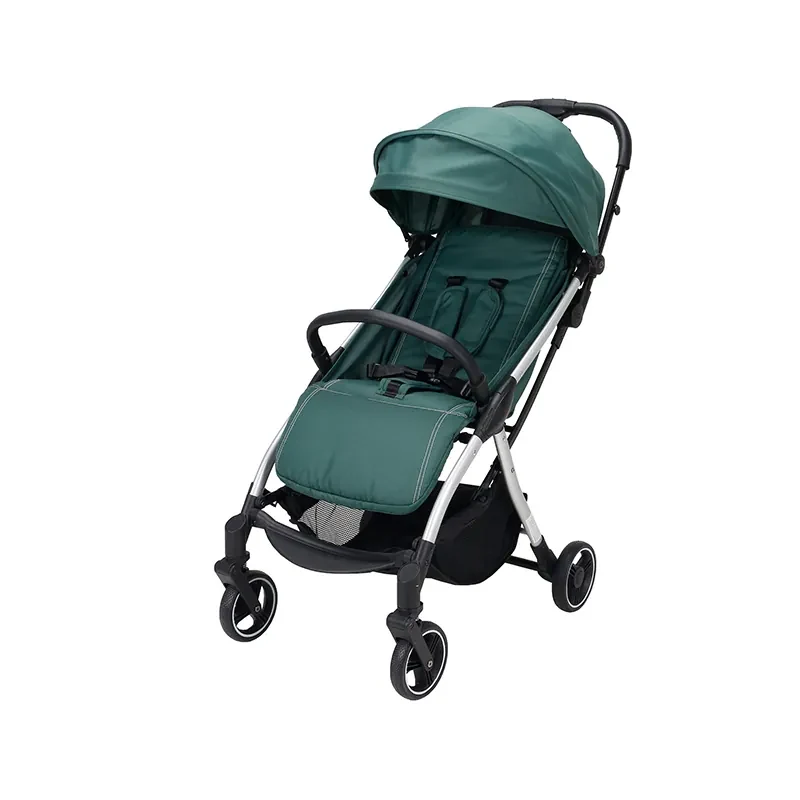
Quick Definitions: OEM vs. ODM
Before we dive in, let’s make sure we’re speaking the same language. These terms are often confused.
OEM (Original Equipment Manufacturer)
You design, we build. You provide the complete product design, specifications, blueprints, and sometimes even tooling. The factory produces exactly to your design.
- Think: Apple manufacturing the iPhone at Foxconn
- You own the IP and design
- The factory is purely a production partner
ODM (Original Design Manufacturer)
We design, you brand. The factory has existing, proven product designs. You select a model, customize colors/branding/packaging, and sell it under your own brand name.
- Think: A brand selling a modified version of a factory’s existing stroller
- The factory owns the base design (unless you pay for exclusivity)
- You focus on branding, marketing, and sales
Side-by-Side Comparison
| Factor | OEM | ODM |
|---|---|---|
| Design source | Your design | Factory’s existing design |
| Time to market | 3–9 months | 1–2 months |
| Tooling cost | High ($5k–$50k+) | Low or zero |
| MOQ | Higher (500–1000+ pcs) | Lower (50–300 pcs) |
| Unit cost | Lower (at scale) | Slightly higher |
| IP ownership | Yours | Factory’s (buy exclusivity optionally) |
| Customization depth | Full | Limited (colors, logo, minor changes) |
| Risk level | Higher (design may fail) | Lower (proven design) |
| Best for | Established brands, unique products | New brands, fast launches, cost-sensitive |
When OEM Makes Sense
OEM is the right choice when you need a product that’s truly yours — either because you have a unique design, or because your brand demands full control.
Scenarios where OEM is the better choice
1. You have a patented or unique product idea If you’ve invented something new — say, a smart baby crib with proprietary sleep monitoring — OEM is the only way to protect your IP while getting it manufactured at scale.
2. Your brand identity depends on design differentiation Premium brands that compete on design and innovation can’t use off-the-shelf ODM products. If your whole value proposition is “better designed,” you need OEM.
3. You have proven market demand and want to optimize cost Once you know a product sells, switching from ODM to OEM lets you lower unit costs and increase margins. The tooling investment pays for itself through per-unit savings.
4. You need specific features that ODM doesn’t offer If none of the existing ODM designs have the exact combination of features your customers want, you’ll need OEM to build it to your specs.
The OEM process timeline
- Design finalization (2–4 weeks): You provide CAD files, specs, materials
- Tooling (4–8 weeks): Factory builds molds and fixtures
- Prototype iteration (2–6 weeks): 1–3 rounds of samples and revisions
- Testing & certification (3–8 weeks): Safety testing, certification
- Mass production (4–6 weeks): Full production run
- Inspection & shipping (2–3 weeks): QC, packaging, ocean freight
Total: 13–29 weeks (3–7 months)
When ODM Makes Sense
ODM is the faster, lower-risk path — and for many baby brands, especially new ones, it’s the smart choice.
Scenarios where ODM is the better choice
1. You’re a new brand launching your first product Why spend $20k on tooling and 6 months on development when you don’t even know if the product will sell? ODM lets you validate the market first.
2. Speed to market is critical If you’ve spotted a trend or seasonal opportunity, ODM gets you from idea to shipping in 4–8 weeks instead of 4–8 months.
3. You’re expanding your product line Adding a complementary category? ODM lets you test the waters without heavy investment. If it sells, you can always move to OEM later.
4. You have limited capital ODM requires essentially zero upfront engineering or tooling cost. Your only expense is inventory and maybe some branding customization.
Myth busted: “ODM means low quality.” False. The same factory that makes OEM products for premium brands also makes ODM products. The difference is who designed it, not how it’s built.
The ODM process timeline
- Product selection (1–2 weeks): Browse catalog, select base model
- Customization (1–2 weeks): Choose colors, logo placement, packaging
- Sampling (1–2 weeks): Pre-production sample for approval
- Mass production (3–5 weeks): Full production run
- Inspection & shipping (2–3 weeks): QC, packaging, ocean freight
Total: 8–14 weeks (2–3.5 months)
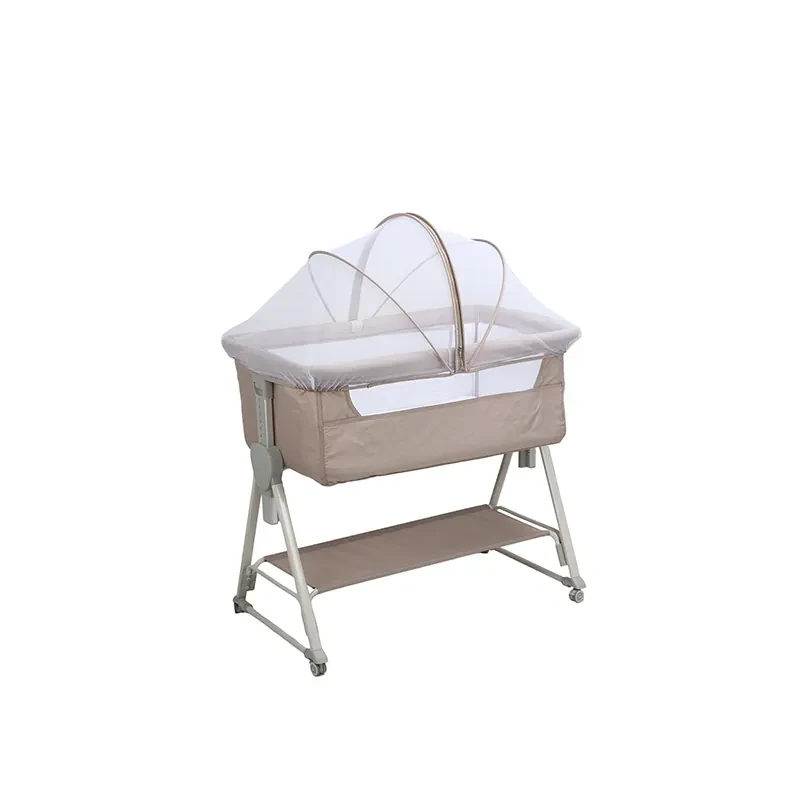
Cost Breakdown: OEM vs. ODM
Let’s use a realistic example: a mid-range baby stroller.
| Cost factor | OEM | ODM |
|---|---|---|
| Tooling / mold cost | $15,000–$30,000 | $0 |
| Engineering / NRE fee | $3,000–$10,000 | $0–$1,000 (customization fee) |
| Certification cost | $2,000–$8,000 (new tests needed) | $0–$2,000 (existing reports + brand name change) |
| Unit cost (500 pcs) | $45–$65 | $50–$70 |
| Unit cost (2000 pcs) | $30–$45 | $40–$55 |
| MOQ | 500 pcs | 100 pcs |
| Total first order (500 pcs) | $42,500–$75,500 | $51,000–$72,000 |
Key insight: At low volumes (under ~1000 units), ODM is often cheaper despite higher per-unit cost, because you avoid tooling and engineering fees. At higher volumes, OEM pulls ahead on per-unit savings.
The Hybrid Approach: ODM First, OEM Later
The smartest strategy we see successful brands use is the hybrid approach:
- Launch with ODM to validate demand, build brand recognition, and generate revenue
- Collect customer feedback on what customers love and what they’d change
- Switch to OEM for version 2.0, incorporating everything you learned
This approach de-risks your launch dramatically. Instead of betting $50k on an unproven design, you spend $10k on ODM inventory and let the market tell you what works.
Many of Cobabies’ long-term partners started this way. They ordered 200 units of an ODM stroller to test the market, and within a year they were doing full OEM projects with custom tooling.
How to Choose: The Decision Framework
Ask yourself these questions. Count how many times you answer “A” vs. “B.”
| Question | A (OEM) | B (ODM) |
|---|---|---|
| Do you have a unique, patentable product idea? | Yes | No |
| Is speed to market more important than perfect design? | No | Yes |
| Do you have $15k+ budgeted for tooling/engineering? | Yes | No |
| Are you targeting the premium/luxury segment? | Yes | No |
| Is this your first product launch? | No | Yes |
| Do you have 6+ months before you need inventory? | Yes | No |
| Do you need full IP ownership? | Yes | No |
| Is your expected annual volume 2000+ units? | Yes | No |
If you answered “A” 6+ times: OEM is likely the right choice. If you answered “B” 6+ times: Start with ODM. If it’s split 4-4: Consider ODM first, with a plan to move to OEM later.
Can a Factory Do Both?
Absolutely. Most established baby product manufacturers — including Cobabies — offer both OEM and ODM services. In fact, many of our clients do both simultaneously:
- Core hero products → OEM (custom design, full IP, brand differentiation)
- Filler / secondary products → ODM (round out the catalog quickly and cheaply)
Having one partner handle both models simplifies your supply chain, reduces communication overhead, and often unlocks better pricing through combined volume.
Questions to Ask Factories About OEM/ODM
Before you commit, make sure you get clear answers:
For OEM projects
- What’s included in the tooling fee, and who owns the tooling after payoff?
- How many design iterations are included before additional fees apply?
- What’s the typical timeline for tooling + first article?
- Do you have in-house engineering and 3D printing for prototyping?
- How do you handle design changes mid-project?
For ODM projects
- Can I see the existing test reports and certifications for this model?
- What customization options are available (colors, materials, logo, packaging)?
- Is design exclusivity available, and what does it cost?
- What’s the MOQ for custom colors vs. standard colors?
- How often do you update the ODM catalog with new designs?
Final Thought
There’s no universally “better” model — it’s about what’s better for your specific situation.
- Choose OEM if you have a unique vision, proven demand, and the budget to invest in your own design.
- Choose ODM if you need to move fast, spend less upfront, or validate a new market before committing serious money.
- Choose hybrid if you’re smart — launch with ODM, learn from the market, then level up to OEM.
At Cobabies, we work with brands at every stage — from first-time entrepreneurs doing 100-piece ODM trial orders to major retailers doing full OEM programs with 50,000+ unit volumes. Whichever model you choose, you’ll get the same quality, the same communication, and the same commitment to getting it right.
Talk to our team about your project →
We’ll give you honest advice on which model makes sense for your brand — even if that means telling you we’re not the right fit.